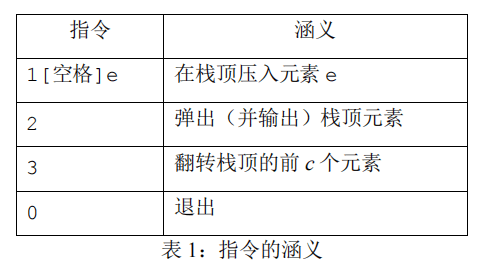
(新壳栈)小 Z 设计了一种新的数据结构“新壳栈”。首先,它和传统的栈一样支持压入、弹出操作。此外,其栈顶的前 c 个元素是它的壳,支持翻转操作。其中,c > 2 是一个固定的正整数,表示壳的厚度。小 Z 还希望,每次操作,无论是压入、弹出还是翻转,都仅用与 c 无关的常数时间完成。聪明的你能帮助她编程实现“新壳栈”吗?
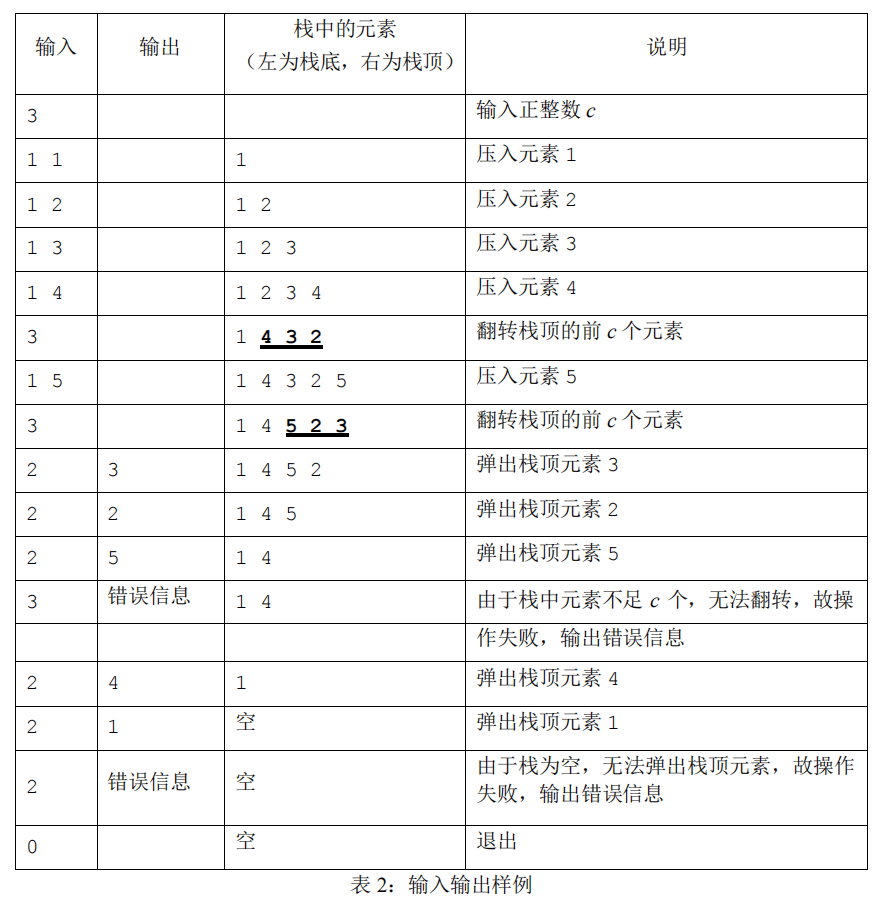
程序期望的实现效果如以下两表所示。其中,输入的第一行是正整数 c,之后每行输入都是一条指令。另外,如遇弹出操作时栈为空,或翻转操作时栈中元素不足 c 个,应当输出相应的错误信息。
#include <iostream>
using namespace std;
const int
NSIZE = 100000,
CSIZE = 1000;
int n, c, r, tail, head, s[NSIZE], q[CSIZE];
//数组 s 模拟一个栈,n 为栈的元素个数
//数组 q 模拟一个循环队列,tail 为队尾的下标,head 为队头的下标
bool direction, empty;
int previous(int k)
{
if (direction)
return ((k + c - 2) % c) + 1;
else
return (k % c) + 1;
}
int next(int k)
{
if (direction)
① ;
else
return ((k + c - 2) % c) + 1;
}
void push()
{
int element;
cin>>element;
if (next(head) == tail) {
n++;
② ;
tail = next(tail);
}
if (empty)
empty = false;
else
head = next(head);
③ = element;
}
void pop()
{
if (empty) {
cout<<"Error: the stack is empty!"<<endl;
return;
}
cout<< ④ <<endl;
if (tail == head)
empty = true;
else {
head = previous(head);
if (n > 0) {
tail = previous(tail);
⑤ = s[n];
n--;
}
}
}
void reverse()
{
int temp;
if ( ⑥ == tail) {
direction = !direction;
temp = head;
head = tail;
tail = temp;
}
else
cout<<"Error: less than "<<c<<" elements in the stack!"<<endl;
}
int main()
{
cin>>c;
n = 0;
tail = 1;
head = 1;
empty = true;
direction = true;
do {
cin>>r;
switch (r) {
case 1: push(); break;
case 2: pop(); break;
case 3: reverse(); break;
}
} while (r != 0);
return 0;
}
相似题推荐
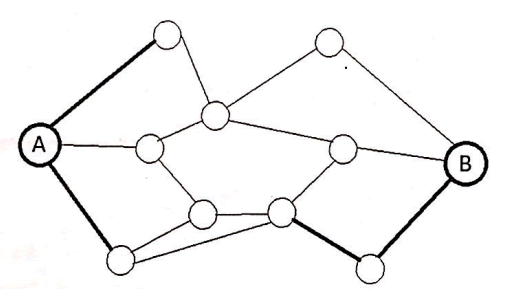
如下图所示,A到B是连通的。假设删除一条细的边的代价是1,删除一条粗的边的代价是2,要让A、B不连通,最小代价是_____(2分),最小代价的不同方案数是_______(3分)。(只要有一条删除的边不同,就是不同的方案)
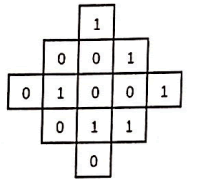
如右图所示,共有13个格子。对任何一个格子进行一次操作,会使得它自己以及与它上下左右相邻的格子中的数字改变(由1变0,或由0变1)。现在要使得所有的格子中的数字都变为0,至少需要 次操作。
(最长路径)给定一个有向无环图,每条边长度为1,求图中的最长路径长度。(第五空2分,其余3分)
输入:第一行是结点数n(不超过100)和边数m,接下来m行,每行两个整数a,b,表示从结点a到结点b有一条有向边。结点标号从0到(n-1)。
输出:最长路径长度。
提示:先进行拓扑排序,然后按照拓扑序计算最长路径。
#include <iostream>
using namespace std;
int n, m, i, j, a, b, head, tail, ans;
int graph[100][100]; // 用邻接矩阵存储图
int degree[100]; // 记录每个结点的入度
int len[100]; // 记录以各结点为终点的最长路径长度
int queue[100]; // 存放拓扑排序结果
int main() {
cin >> n >> m;
for (i = 0; i < n; i++)
for (j = 0; j < n; j++)
graph[i][j] = 0;
for (i = 0; i < n; i++)
degree[i] = 0;
for (i = 0; i < m; i++) {
cin >> a >> b;
graph[a][b] = 1;
(1) ;
}
tail = 0;
for (i = 0; i < n; i++)
if ( (2) ) {
queue[tail] = i;
tail++;
}
head = 0;
while (tail < n - 1) {
for (i = 0; i < n; i++)
if (graph[queue[head] ][i] == 1) {
(3) ;
if (degree[i] == 0) {
queue[tail] = i;
tail++;
}
}
(4) ;
}
ans = 0;
for (i = 0; i < n; i++) {
a = queue[i];
len[a] = 1;
for (j = 0; j < n; j++)
if (graph[j][a] == 1 && len[j] + 1 > len[a])
len[a] = len[j] + 1;
if ( (5) )
ans = len[a];
}
cout << ans << endl;
return 0;
}
设A和B是两个长为n的有序数组,现在需要将A和B合并成一个排好序的数组,请问任何以元素比较作为基本运算的归并算法最坏情况下至少要做( )次比较。
| A. n2 |
B. n logn |
| C. 2n |
D. 2n-1 |